Fire-Damaged Structures: Assessment, Verification, and Rectification
Fire events can fundamentally alter a building’s structural integrity — even when collapse does not occur.
The challenge lies in distinguishing visual damage from structural damage.
New Nordic approaches fire-damaged buildings with a systematic, engineering-led methodology focused on safety, verification, and informed decision-making.
1. Fire Damage to Concrete and Steel — Understanding the Mechanisms
Fire exposure affects materials differently depending on temperature, duration, and cooling conditions.
Concrete:
- Loss of compressive strength at elevated temperatures
- Microcracking and internal damage invisible to the naked eye
- Spalling, exposing reinforcement and reducing section capacity
- Degradation of bond between concrete and steel
Steel:
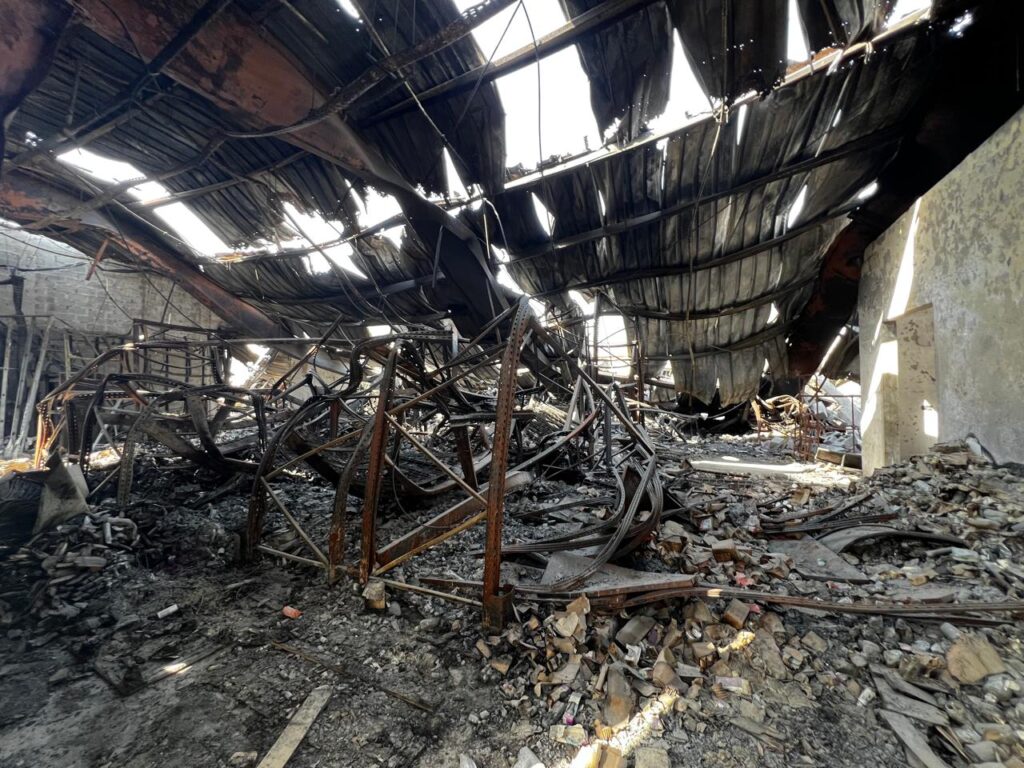
- Reduction in yield strength and elastic modulus
- Permanent deformations due to thermal expansion
- Loss of ductility, increasing brittle failure risk
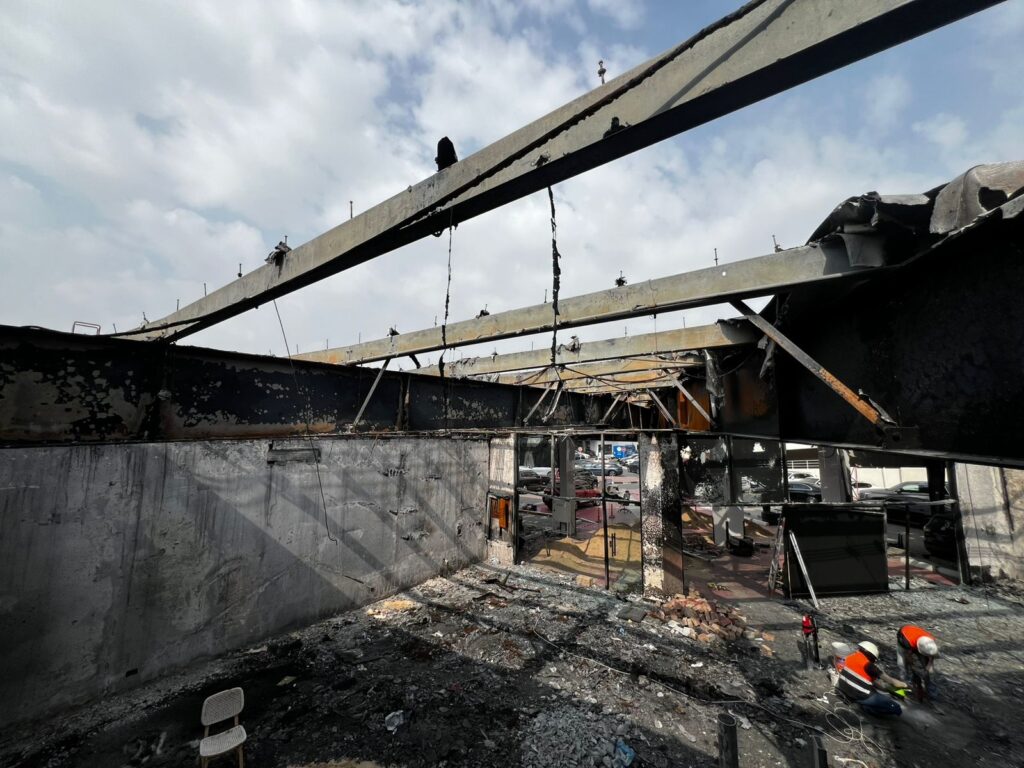
Crucially, structural damage is not always visible.
Elements may appear intact while having lost a significant percentage of their original capacity.
2. Planning the Investigation — Tests and Critical Structural Elements
A successful fire damage assessment begins with a well-defined investigation strategy.
The assessment plan considers:
- Fire severity, duration, and ventilation conditions
- Structural system and load paths
- Importance of elements within the overall stability scheme
Priority is typically given to:
- Columns, transfer beams, and load-bearing walls
- Slabs and beams within fire compartments
- Steel frames, connections, and anchorage zones
Typical assessment methods include:
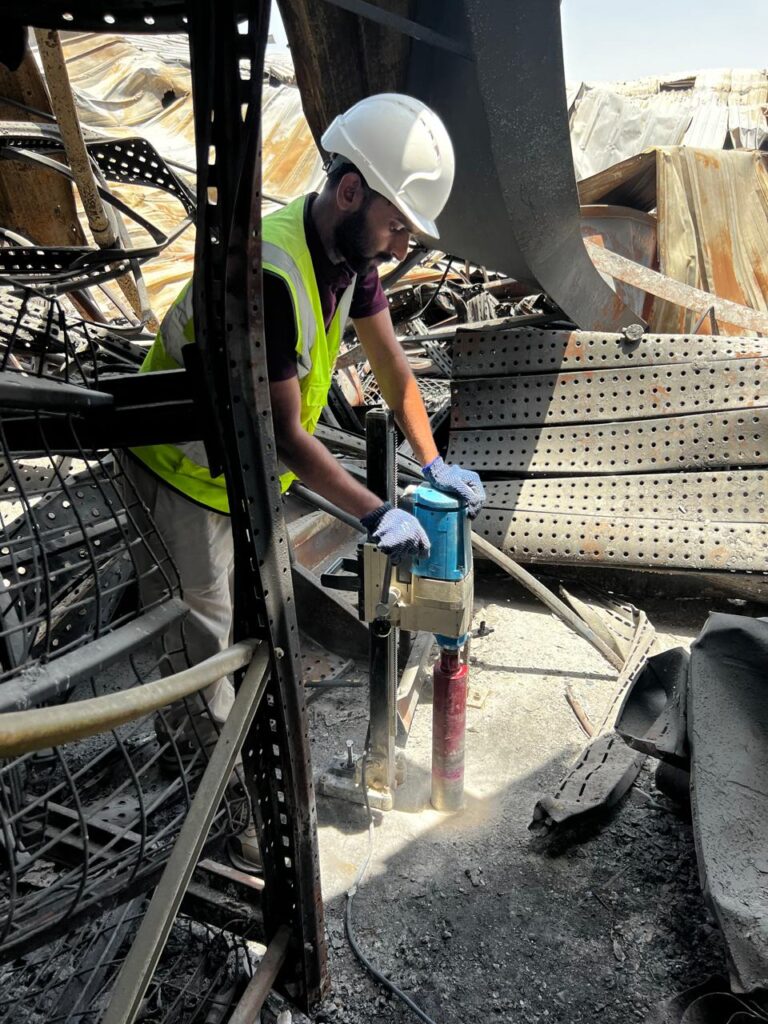
- Detailed visual damage mapping
- Non-destructive testing to screen affected zones
- Selective material sampling for residual strength evaluation
- Depth of thermal damage assessment
The objective is to identify both direct and indirect fire effects, ensuring no compromised element is overlooked.
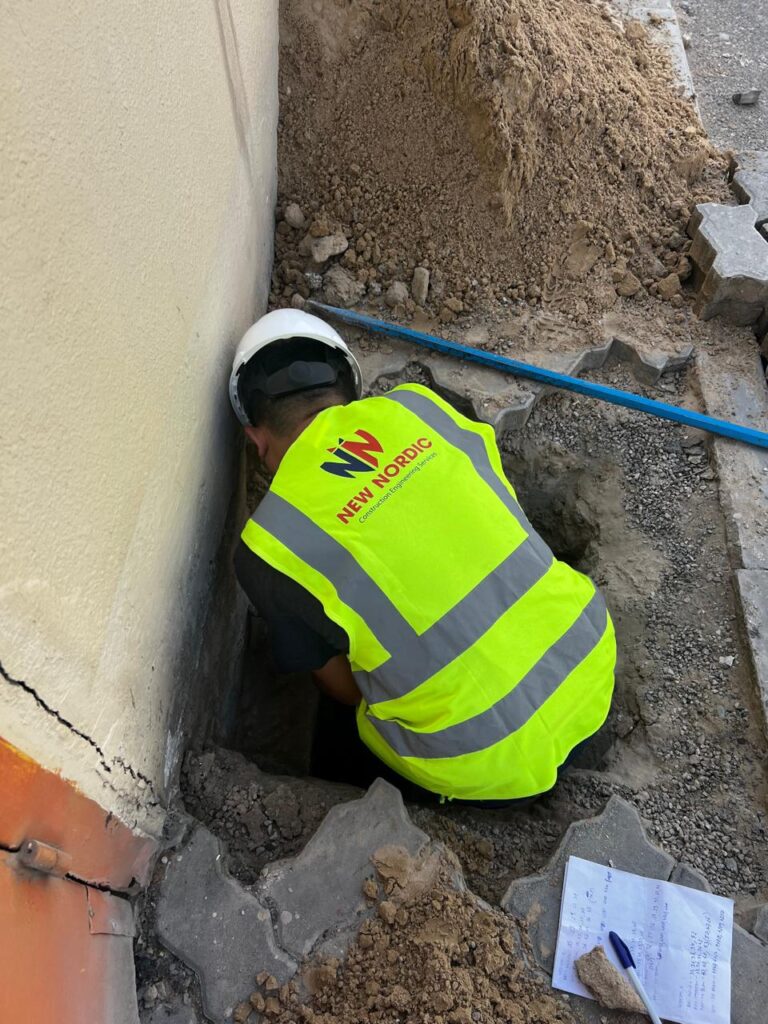
3. Site Verification and Structural Audit
Testing results must always be verified against actual structural behaviour.
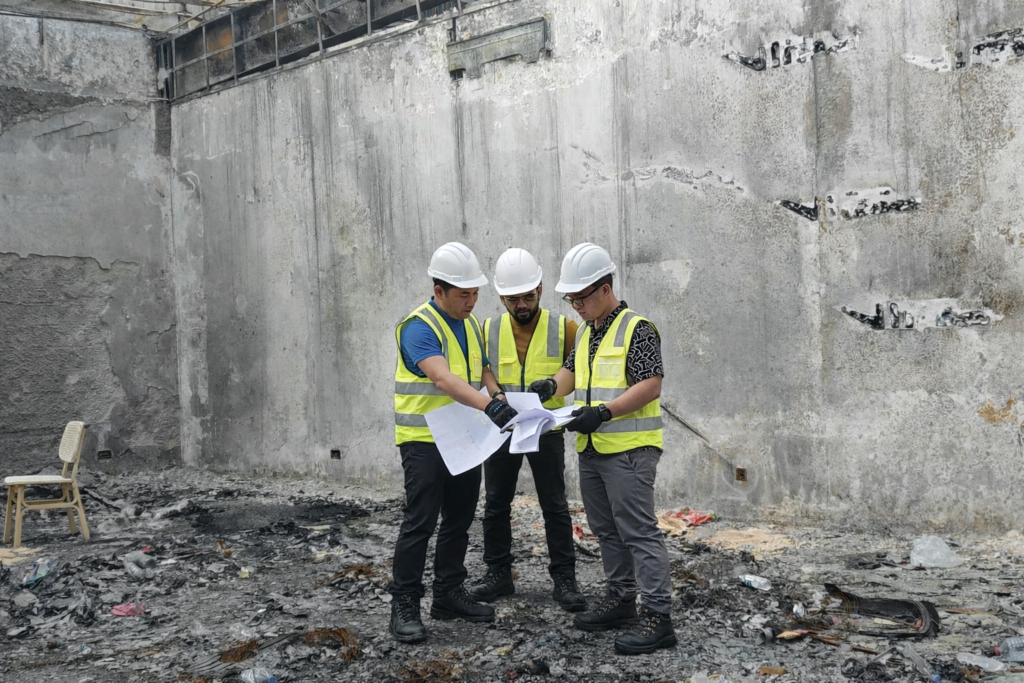
During site audits, engineers:
- Correlate test data with observed damage patterns
- Verify load paths and structural continuity
- Assess stability under current and temporary conditions
- Identify any progressive or delayed damage mechanisms
This stage often determines whether:
- Immediate temporary support is required
- Parts of the building can remain operational
- Phased rectification is feasible
Engineering judgement at this stage is critical for risk mitigation and safety assurance.
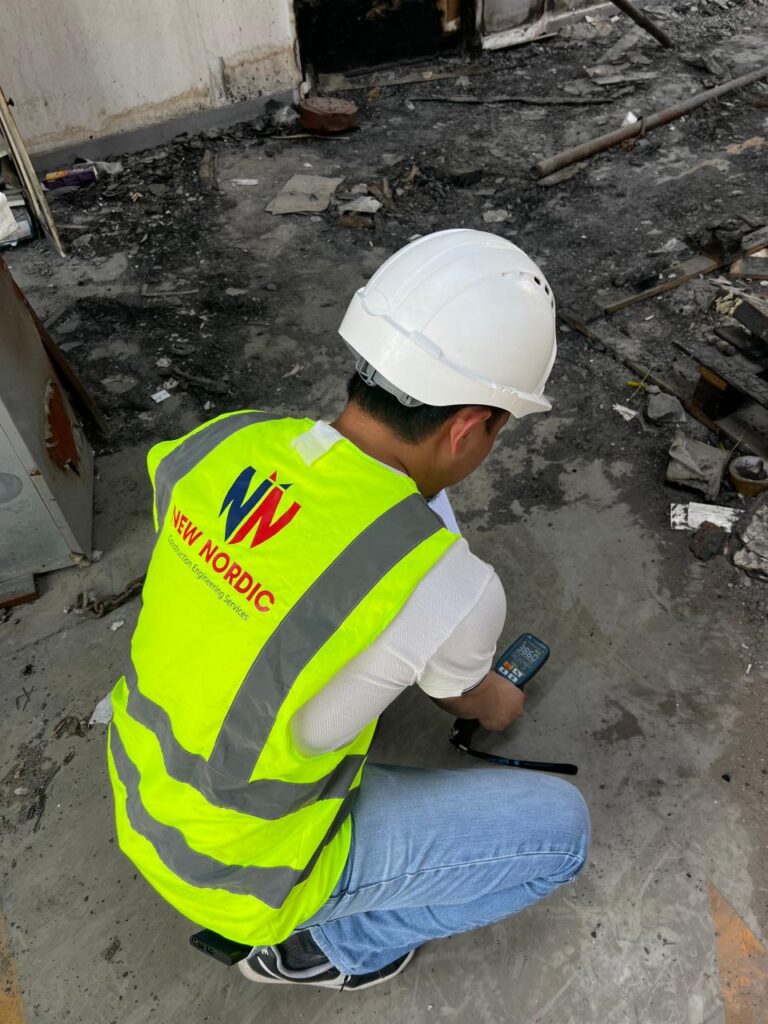
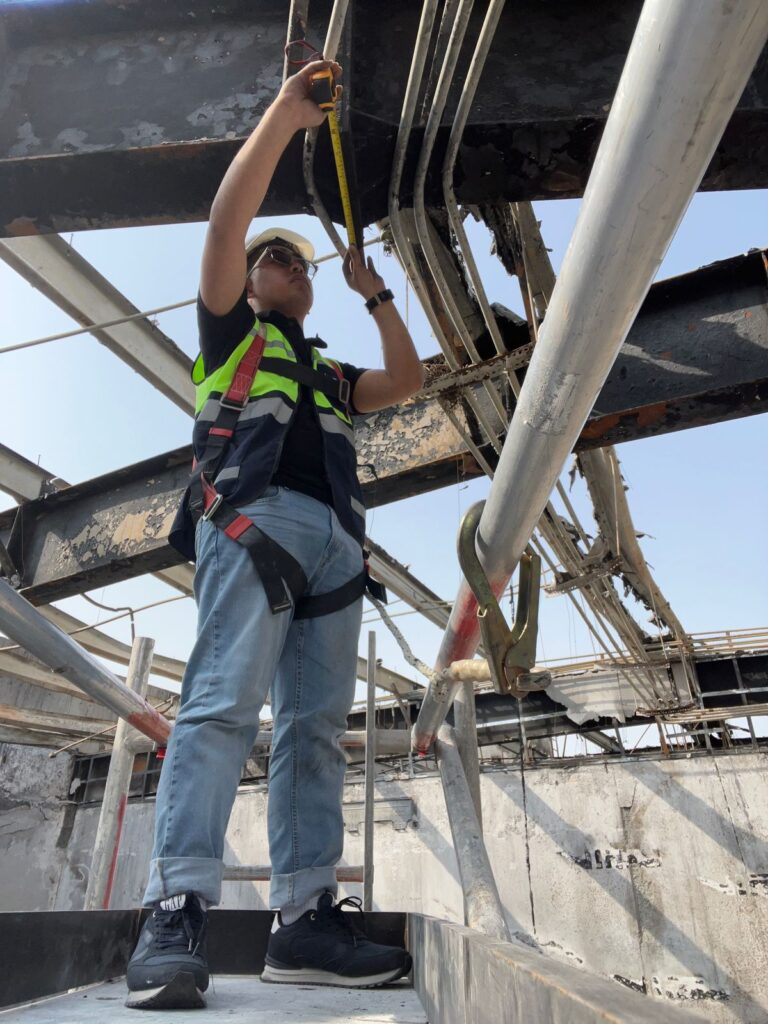
4. Rectification and Reconstruction Strategy
Based on verified findings, a tailored rectification strategy is developed.
Depending on damage severity, solutions may include:
- Localised concrete repair and re-alkalisation
- Structural strengthening using steel or composite systems
- Partial replacement of severely damaged elements
- Full reconstruction of critical structural components
Beyond restoring capacity, rectification strategies aim to:
- Improve durability and fire resistance
- Extend the remaining service life of the structure
- Reduce long-term maintenance and operational risks
Fire damage rectification is not simply repair — it is an opportunity to rebuild smarter, safer, and more resilient structures.